Published in two parts in 1605 and 1615 by Miguel de Cervantes Saavedra, Don Quixote of La Mancha tells the story of Alonso Quijano, a hidalgo who loses his sanity after reading chivalric books and decides to become a knight-errant under the name of Don Quixote. Armed with an old suit of armor and riding his horse Rocinante, he sets out in search of adventures to defend honor and justice, accompanied by his faithful squire Sancho Panza, a simple and practical man who contrasts with his idealistic view of the world.
Throughout the story, Don Quixote constantly confuses reality with his chivalric fantasies, such as when he fights windmills believing them to be giants or imagines castles where there are only inns. These situations generate comic episodes, but also reveal a profound reflection on the nature of reality, madness, and human dreams. Sancho, for his part, gradually evolves, showing a mixture of common sense and loyalty to his master.
In the second part, Cervantes introduces an innovative element: the characters are aware of Don Quixote’s fame thanks to the publication of the first part of his adventures. This adds a more complex and reflective tone, where fiction and reality intertwine even further. Finally, after multiple adventures, Don Quixote returns home, regains his sanity, and dies as Alonso Quijano, thus closing a story that combines humor, social criticism, and deep humanity.
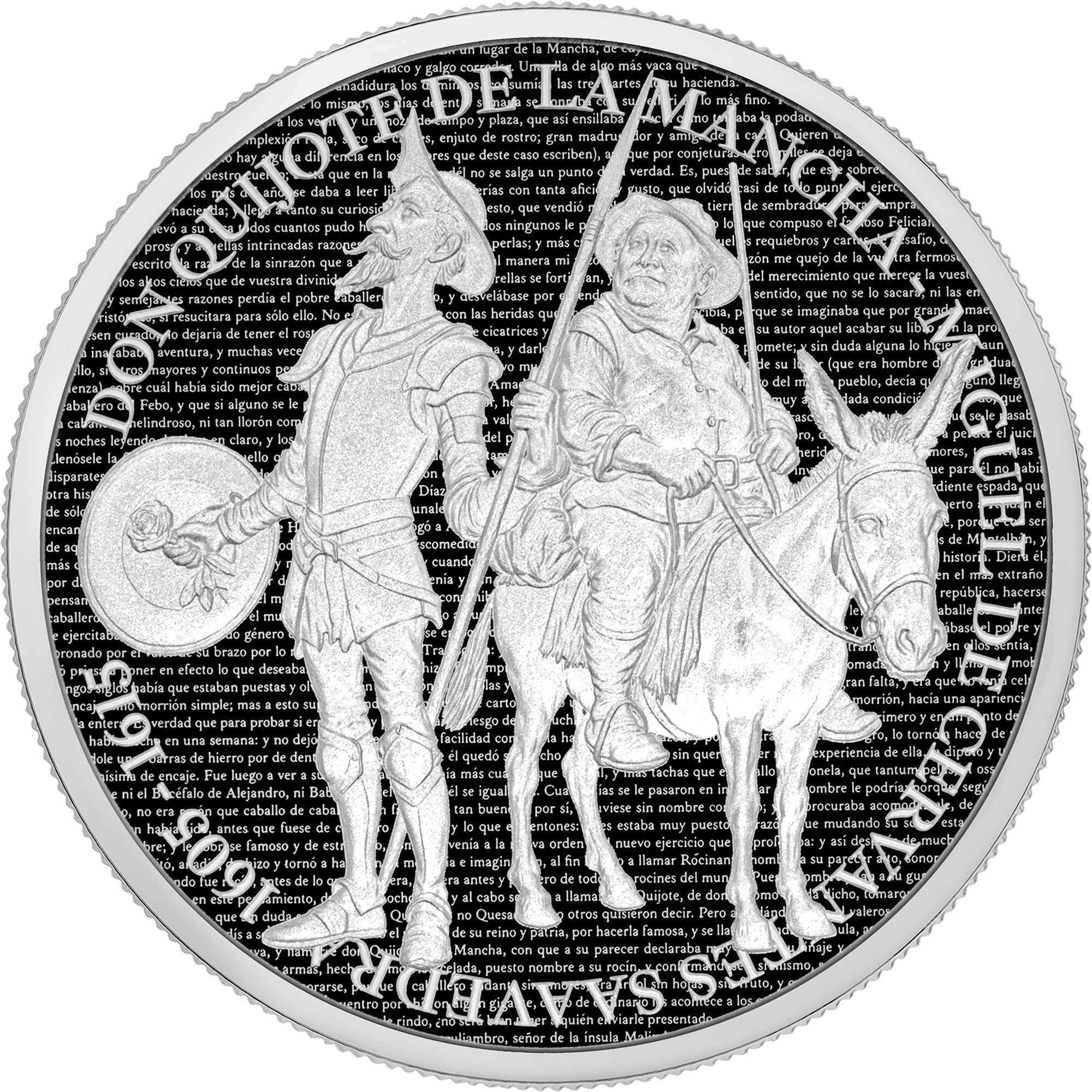
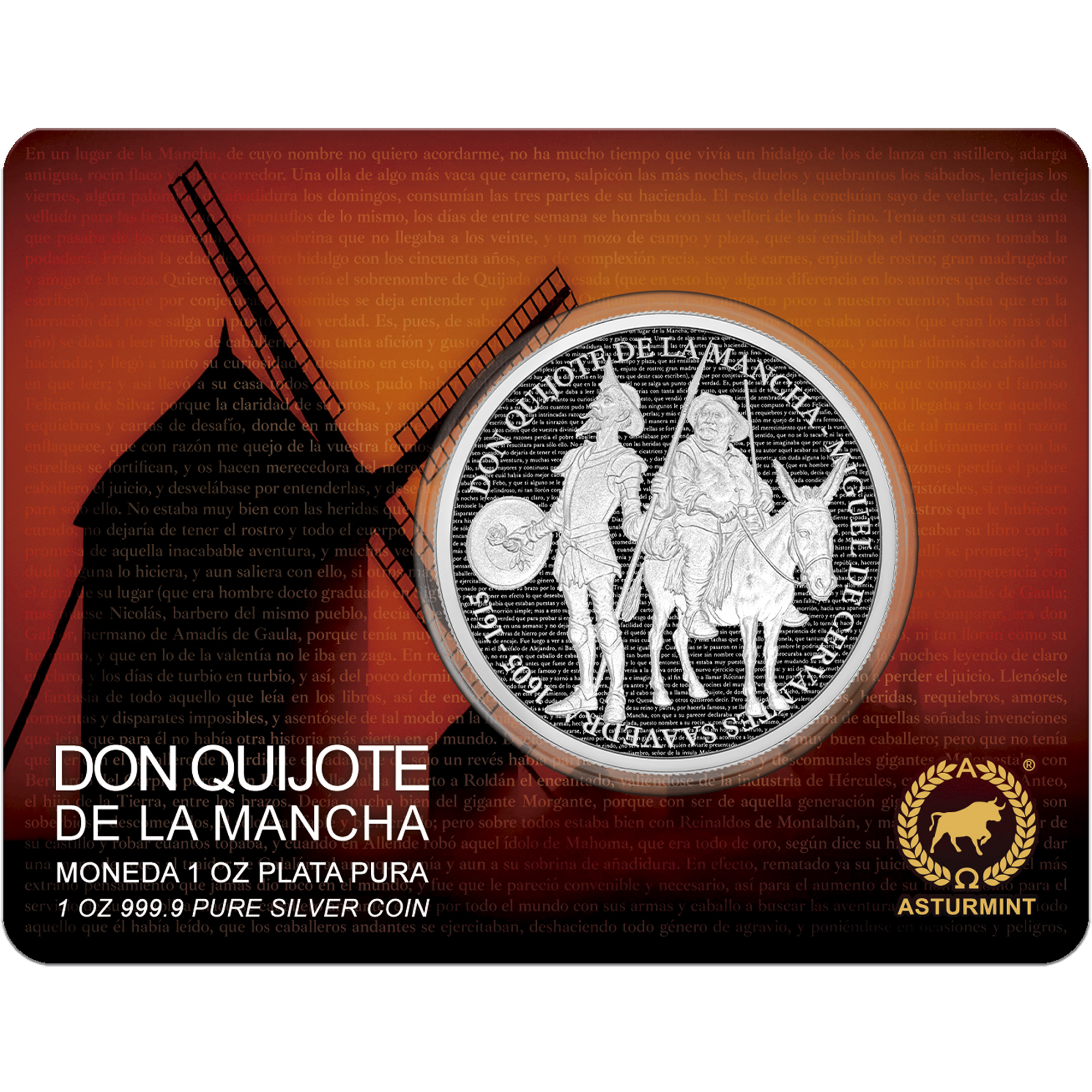
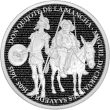
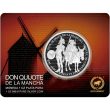
On the reverse, the figures of Don Quixote and Sancho Panza can be seen, as they are usually represented, in a frozen silver finish, on a proof background with the first two chapters of the work in relief.
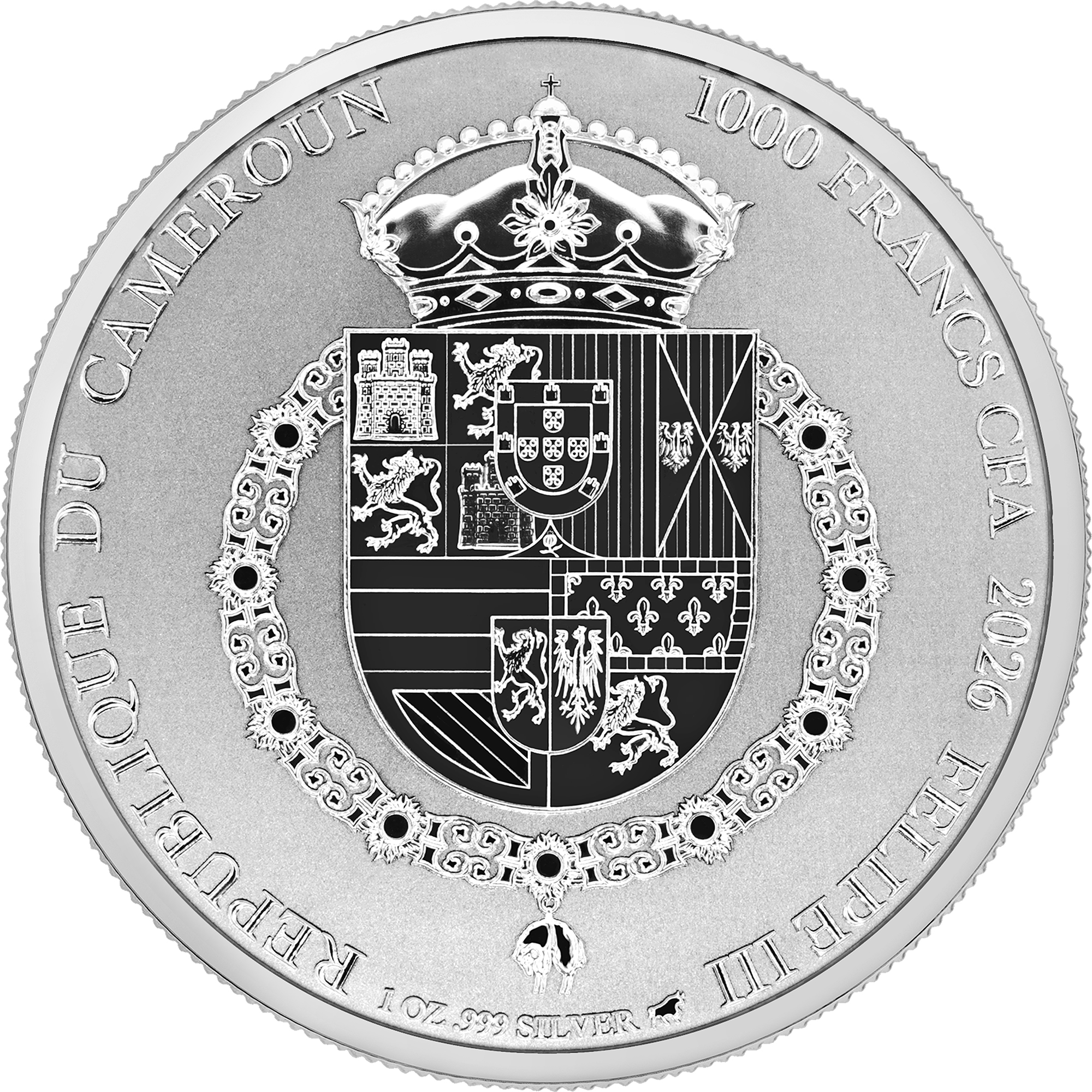
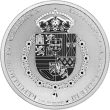
On the obverse, the coat of arms of Philip II and Philip III can be seen, who reigned in Spain both during the life of Miguel de Cervantes and in the period in which this chivalric novel takes place. This side of the coin presents four different silver finishes, from mirror to frozen silver, including two intermediate ones, allowing appreciation of the details of such a complex coat of arms.